Latest Dental Implant Innovations & Technology in 2026
Implant dentistry keeps moving forward, and the pace of change in 2026 reflects years of refinement in surgical technique, digital planning, and instrument design. Dental implant technology in 2026 centers on precision, predictability, and workflows that reduce guesswork at every stage of treatment.
This article looks at the innovations shaping implant practice this year, from digital planning tools to the surgical instruments that turn a plan into a precisely placed implant.
Guided Implant Surgery Continues to Mature
Guided implant surgery has moved from a niche technique to a standard part of many treatment plans. Digital scanning, cone beam imaging, and treatment planning software now let clinicians map the exact position, angle, and depth of an implant before touching a handpiece to the patient.
What has improved in guided workflows this year:
-
Faster turnaround between scan and surgical guide fabrication
-
Better integration between planning software and drill sequencing
-
Tighter tolerances between the planned digital position and the final osteotomy
-
Wider adoption across general practices, not just specialist clinics
Guided implant surgery works best when clinicians pair it with instruments that match the same level of precision as the plan itself. A guide only controls the entry point and angle. The drills still need to track that trajectory cleanly through the bone.
Advances in Implant Osteotomy Drills and Bone Preparation
Drill design has seen meaningful refinement in recent years. Implant osteotomy drills now come in shapes and geometries built for specific clinical goals rather than a single all-purpose design.
Clinicians preparing an osteotomy today can choose from:
-
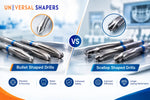
Bullet-shaped drills that self-centre at the entry point for better initial stability
-
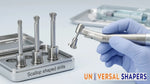
Scallop-shaped drills that contour the crestal bone after the osteotomy is complete
-
Cortical release drills that release the cortical portion of the site without disturbing the density of the cancellous bone underneath
-
Auxiliary and extension drills that improve access in tight anterior spaces
This range of options lets clinicians match the drill to the bone quality and case complexity they are working with, rather than relying on one drill type for every situation. Choosing the best implant drills for a given case now depends as much on bone density and case anatomy as on personal habit.
Bone Profiling Drills and Soft Tissue Management
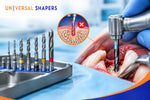
Soft tissue outcomes depend heavily on how the surrounding bone is shaped, and bone profiling drills have become a bigger part of that conversation in 2026. These drills sculpt the coronal portion of the osteotomy to create space for healing abutments, prosthetic components, and natural-looking soft tissue architecture.
Contouring the crestal bone with a profiling step, rather than leaving a flat rim, supports:
-
A smoother transition between the implant platform and the restoration
-
Better seating for healing abutments and cover screws
-
More predictable soft tissue emergence in esthetic zone cases
Practices that once reserved bone profiling for complex anterior cases now build it into a wider range of protocols, since the added step takes little time but improves the consistency of the final result.
Implant Abutment Drills and Multi Unit Abutment Workflows
Full-arch and multi-unit cases have benefited from steady improvement in implant abutment drills and the instruments clinicians use to prepare sites for a multi unit abutment. These drills profile bone around the implant platform so the abutment seats cleanly, which matters even more in All-on-X style treatment where several implants need to align with a single prosthetic framework.
Clinicians managing complex full-arch cases now rely on instrument kits that combine:
-
Standard osteotomy drills for the core implant site
-
Profiling drills for the surrounding bone
-
Dedicated implant abutment drills for cover screw and abutment access
-
Extension drills for improved reach in posterior or full-arch situations
A well-organized kit reduces the number of instrument changes during surgery, which shortens chair time and keeps the surgical field cleaner.
What Makes a Strong Dental Implant Surgical Kit in 2026
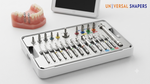
The instruments a clinician chooses matter as much as the technique itself. A capable dental implant surgical kit in 2026 typically brings together several drill types into one coordinated system rather than requiring separate purchases from multiple sources.
|
Kit Component |
Primary Role |
Where It Adds the Most Value |
|
Osteotomy drills |
Create the core implant site |
Every implant case |
|
Bullet or self-centring drills |
Improve entry point accuracy |
Guided cases, sloped ridges |
|
Bone profiling drills |
Contour crestal bone |
Esthetic zone, immediate placement |
|
Cortical release drills |
Release cortical bone without affecting cancellous density |
Dense bone, multi-unit cases |
|
Abutment and extension drills |
Support abutment seating and posterior access |
Full-arch and All-on-X cases |
Manufacturers such as Universal Shapers design their kits around this kind of coordinated sequencing, so clinicians can move from osteotomy to profiling to abutment preparation without switching between unrelated product lines.
Bone Drilling Technique Still Drives the Outcome
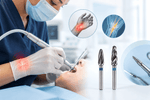
Even with better instruments, bone drilling for dental implants still depends on fundamentals that have not changed: controlled speed, adequate irrigation, and a steady hand at each stage of the sequence. Technology supports the clinician rather than replacing clinical judgment.
A few habits continue to separate predictable outcomes from inconsistent ones:
-
Following the manufacturer's recommended drill sequence rather than skipping steps
-
Maintaining copious irrigation to control heat during longer drilling sequences
-
Confirming depth and angulation at each drill change, even in guided cases
-
Matching drill selection to bone density rather than defaulting to habit
Choosing the Right Instruments for Your Practice
With so many drill types and kit configurations available, choosing instruments for a modern implant practice comes down to a few practical questions.
-
Does the kit cover the full range of cases your practice sees, from single-tooth to full-arch?
-
Do the drills work with the implant systems and dental abutment components you already use?
-
Does the manufacturer provide clear sequencing guidance and reliable support?
-
Does the kit reduce instrument changes and streamline your surgical workflow?
Practices that answer these questions before investing tend to get more consistent value from their instruments over time, rather than accumulating drills that rarely leave the drawer.
Looking Ahead
Dental implant technology in 2026 reflects a broader shift toward precision at every stage, from digital planning through guided implant surgery to the specific drills clinicians use to prepare bone and seat abutments. None of these advances replace clinical skill, but together they give clinicians more control over outcomes that once depended heavily on individual technique.
Universal Shapers continues to focus on precision-engineered drills and surgical kits built around this kind of coordinated workflow, giving implant practices instruments designed to match the demands of modern treatment planning.
For clinicians looking to update their surgical kit for 2026, exploring a coordinated system of osteotomy, profiling, and abutment drills is a practical place to start.
Implant dentistry keeps moving forward, and the pace of change in 2026 reflects years of refinement in surgical technique, digital planning, and instrument design. Dental implant technology in 2026 centers on precision, predictability, and workflows that reduce guesswork at every stage of treatment.
This article looks at the innovations shaping implant practice this year, from digital planning tools to the surgical instruments that turn a plan into a precisely placed implant.
Guided Implant Surgery Continues to Mature
Guided implant surgery has moved from a niche technique to a standard part of many treatment plans. Digital scanning, cone beam imaging, and treatment planning software now let clinicians map the exact position, angle, and depth of an implant before touching a handpiece to the patient.
What has improved in guided workflows this year:
-
Faster turnaround between scan and surgical guide fabrication
-
Better integration between planning software and drill sequencing
-
Tighter tolerances between the planned digital position and the final osteotomy
-
Wider adoption across general practices, not just specialist clinics
Guided implant surgery works best when clinicians pair it with instruments that match the same level of precision as the plan itself. A guide only controls the entry point and angle. The drills still need to track that trajectory cleanly through the bone.
Advances in Implant Osteotomy Drills and Bone Preparation
Drill design has seen meaningful refinement in recent years. Implant osteotomy drills now come in shapes and geometries built for specific clinical goals rather than a single all-purpose design.
Clinicians preparing an osteotomy today can choose from:
-
Bullet-shaped drills that self-centre at the entry point for better initial stability
-
Scallop-shaped drills that contour the crestal bone after the osteotomy is complete
-
Cortical release drills that release the cortical portion of the site without disturbing the density of the cancellous bone underneath
-
Auxiliary and extension drills that improve access in tight anterior spaces
This range of options lets clinicians match the drill to the bone quality and case complexity they are working with, rather than relying on one drill type for every situation. Choosing the best implant drills for a given case now depends as much on bone density and case anatomy as on personal habit.
Bone Profiling Drills and Soft Tissue Management
Soft tissue outcomes depend heavily on how the surrounding bone is shaped, and bone profiling drills have become a bigger part of that conversation in 2026. These drills sculpt the coronal portion of the osteotomy to create space for healing abutments, prosthetic components, and natural-looking soft tissue architecture.
Contouring the crestal bone with a profiling step, rather than leaving a flat rim, supports:
-
A smoother transition between the implant platform and the restoration
-
Better seating for healing abutments and cover screws
-
More predictable soft tissue emergence in esthetic zone cases
Practices that once reserved bone profiling for complex anterior cases now build it into a wider range of protocols, since the added step takes little time but improves the consistency of the final result.
Implant Abutment Drills and Multi Unit Abutment Workflows
Full-arch and multi-unit cases have benefited from steady improvement in implant abutment drills and the instruments clinicians use to prepare sites for a multi unit abutment. These drills profile bone around the implant platform so the abutment seats cleanly, which matters even more in All-on-X style treatment where several implants need to align with a single prosthetic framework.
Clinicians managing complex full-arch cases now rely on instrument kits that combine:
-
Standard osteotomy drills for the core implant site
-
Profiling drills for the surrounding bone
-
Dedicated implant abutment drills for cover screw and abutment access
-
Extension drills for improved reach in posterior or full-arch situations
A well-organized kit reduces the number of instrument changes during surgery, which shortens chair time and keeps the surgical field cleaner.
What Makes a Strong Dental Implant Surgical Kit in 2026
The instruments a clinician chooses matter as much as the technique itself. A capable dental implant surgical kit in 2026 typically brings together several drill types into one coordinated system rather than requiring separate purchases from multiple sources.
|
Kit Component |
Primary Role |
Where It Adds the Most Value |
|
Osteotomy drills |
Create the core implant site |
Every implant case |
|
Bullet or self-centring drills |
Improve entry point accuracy |
Guided cases, sloped ridges |
|
Bone profiling drills |
Contour crestal bone |
Esthetic zone, immediate placement |
|
Cortical release drills |
Release cortical bone without affecting cancellous density |
Dense bone, multi-unit cases |
|
Abutment and extension drills |
Support abutment seating and posterior access |
Full-arch and All-on-X cases |
Manufacturers such as Universal Shapers design their kits around this kind of coordinated sequencing, so clinicians can move from osteotomy to profiling to abutment preparation without switching between unrelated product lines.
Bone Drilling Technique Still Drives the Outcome
Even with better instruments, bone drilling for dental implants still depends on fundamentals that have not changed: controlled speed, adequate irrigation, and a steady hand at each stage of the sequence. Technology supports the clinician rather than replacing clinical judgment.
A few habits continue to separate predictable outcomes from inconsistent ones:
-
Following the manufacturer's recommended drill sequence rather than skipping steps
-
Maintaining copious irrigation to control heat during longer drilling sequences
-
Confirming depth and angulation at each drill change, even in guided cases
-
Matching drill selection to bone density rather than defaulting to habit
Choosing the Right Instruments for Your Practice
With so many drill types and kit configurations available, choosing instruments for a modern implant practice comes down to a few practical questions.
-
Does the kit cover the full range of cases your practice sees, from single-tooth to full-arch?
-
Do the drills work with the implant systems and dental abutment components you already use?
-
Does the manufacturer provide clear sequencing guidance and reliable support?
-
Does the kit reduce instrument changes and streamline your surgical workflow?
Practices that answer these questions before investing tend to get more consistent value from their instruments over time, rather than accumulating drills that rarely leave the drawer.
Looking Ahead
Dental implant technology in 2026 reflects a broader shift toward precision at every stage, from digital planning through guided implant surgery to the specific drills clinicians use to prepare bone and seat abutments. None of these advances replace clinical skill, but together they give clinicians more control over outcomes that once depended heavily on individual technique.
Universal Shapers continues to focus on precision-engineered drills and surgical kits built around this kind of coordinated workflow, giving implant practices instruments designed to match the demands of modern treatment planning.
For clinicians looking to update their surgical kit for 2026, exploring a coordinated system of osteotomy, profiling, and abutment drills is a practical place to start.