Does Constantly Using Dental Drills Give Wrist Pain and Carpal Tunnel?
If your wrist aches at the end of a long implant day, you are not imagining it. Dental professionals who spend years holding a handpiece under sustained grip and repetitive motion face a real risk of hand and wrist strain, and in some cases, carpal tunnel syndrome. At Universal Shapers, we hear this concern often from the clinicians we work with, and we think it deserves a straight answer rather than a vague one.
In this article, we look at why repetitive drilling puts strain on the hand and wrist, what the research says about carpal tunnel risk in dentistry, and how instrument design, including our Scallop Shaped Drills and Bullet Shaped Drills, plays a role in reducing that strain.
How Repetitive Drilling Affects the Hand and Wrist
Every implant case asks your hand to do the same job over and over: grip a handpiece firmly, apply controlled pressure, and hold a steady position while managing vibration from the drill. Over a single case, that load feels manageable. Over years of practice, it adds up.
A few factors that contribute to cumulative strain:
-
Sustained pinch grip on the handpiece throughout each drilling step
-
Repetitive forearm rotation when switching between drill diameters
-
Vibration transmitted through the handpiece during cutting
-
Static wrist positioning held for extended periods during longer cases
None of these factors cause injury on their own in a single procedure. The risk builds from repetition across hundreds or thousands of cases over a career.
What Carpal Tunnel Syndrome Is, and Why Dental Professionals Face Added Risk
Carpal tunnel syndrome develops when pressure builds on the median nerve as it passes through the wrist, often causing numbness, tingling, or pain in the hand and fingers. It is a recognized occupational risk in professions that combine repetitive hand motion with sustained grip force, and dentistry sits squarely in that category.
Research into musculoskeletal disorders among dental professionals consistently points to the hand and wrist as a common site of complaint, alongside the neck and lower back. Prolonged procedures, awkward wrist angles, and instruments that demand excessive grip force all contribute to that risk over time.
If you notice ongoing numbness, tingling, or weakness in your hand, we recommend speaking with a physician rather than managing the symptoms on your own. Early evaluation makes a meaningful difference in how these conditions progress.
Studies looking at occupational health among dentists and dental hygienists have found that a large share report some form of hand, wrist, or forearm discomfort over the course of their career. The risk tends to climb with years in practice and with the number of hours spent performing fine motor tasks under sustained grip, which is exactly the pattern seen in implant surgery and restorative dentistry alike.
The Hidden Cost of Poor Instrument Ergonomics
Not every handpiece and drill places the same demand on your hand. Instruments that require excessive grip force, generate more vibration, or force an awkward wrist angle during use add strain that has little to do with the clinical task itself.
Signs your instruments may be contributing to hand strain:
-
You grip harder than feels necessary to maintain control during drilling
-
Your wrist bends at an unnatural angle to keep the drill aligned with the osteotomy
-
You notice hand fatigue earlier in the day than you would expect from case volume alone
-
Longer cases leave your hand stiff or sore well after the procedure ends
We designed our instruments with these signs in mind, since reducing unnecessary physical demand during a procedure supports both comfort and precision.
How Drill Design Affects Hand Strain
Drill geometry has a direct effect on how much correction and repositioning your hand needs to perform during a case, and that correction is where a lot of unnecessary strain comes from. A drill that drifts off its intended path asks your hand to compensate mid-procedure, often through small, repeated adjustments that add up across a case.
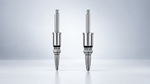
Our Bullet Shaped Drills address one part of this problem directly. Their self-centring tip settles into the entry point more reliably than a flat conventional tip, which reduces the number of correctional movements your hand makes at the start of drilling. Fewer corrections means less repeated micro-tension through the wrist and forearm.
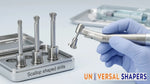
Our Scallop Shaped Drills address a different stage of the sequence. Because they are purpose-built for crestal bone contouring, you do not need to improvise that shaping with a standard drill held at an awkward angle. A dedicated instrument for a dedicated task tends to ask less of your hand than adapting a general-purpose drill to a job it was not built for.
What well-designed drill geometry can reduce during a case:
-
The number of repositioning movements needed to correct drift
-
The grip force required to hold a stable trajectory
-
The time your hand spends under sustained tension during a single osteotomy
-
The need to improvise technique with the wrong instrument for the task
We want to be clear that no drill design eliminates the physical demands of dental practice on its own. What thoughtful instrument design can do is reduce some of the avoidable strain that comes from fighting an instrument rather than working with it.
Practical Ways to Reduce Wrist Strain During Implant Procedures
Instrument choice is one piece of a larger picture. We recommend combining well-designed drills with habits that protect your hand and wrist over the course of a career.
-
Take short breaks between cases to stretch your hands, wrists, and forearms
-
Adjust your operatory chair and patient position so your wrist stays in a neutral position rather than bent or twisted
-
Use a light, controlled grip rather than gripping the handpiece tighter than the task requires
-
Rotate longer or more physically demanding cases across your schedule rather than scheduling them back to back
-
Pay attention to early signs of discomfort rather than pushing through pain
Building these habits alongside thoughtful instrument choices gives your hands the best chance of holding up over a long career in implant dentistry.
|
Risk Factor |
Why It Matters |
What Helps |
|
Sustained pinch grip |
Keeps forearm and hand muscles under continuous tension |
Lighter, well-balanced handpieces and a relaxed grip |
|
Repetitive correction |
Adds small, repeated strain when a drill drifts off course |
Self-centring drills that hold trajectory from first contact |
|
Awkward wrist angle |
Forces the wrist into non-neutral positions for extended periods |
Chair and patient positioning that keeps the wrist neutral |
|
Extended case length |
Compounds fatigue the longer the hand stays under load |
Scheduled breaks and instrument sequencing that reduces steps |
Why We Design Our Instruments With Ergonomics in Mind
At Universal Shapers, we think about hand strain as a practical design problem, not an afterthought. When we engineer a Scallop Shaped Drill or a Bullet Shaped Drill, we consider how the geometry affects the number of corrective movements a clinician needs to make, not just the clinical outcome at the bone level.
We do not claim that any instrument prevents carpal tunnel syndrome on its own. What we aim for is a drill system that asks less of your hand during each step of the sequence, so the cumulative physical demand across a career stays lower than it would with instruments that fight your technique instead of supporting it.
Conclusion
Constant dental drilling does carry a real risk of hand and wrist strain, and carpal tunnel syndrome is a recognized concern among clinicians who perform repetitive procedures over long careers. Instrument design plays a meaningful role in that equation, alongside posture, grip habits, and scheduling.
Our Scallop Shaped Drills and Bullet Shaped Drills reflect our effort to reduce unnecessary strain at specific points in your drilling sequence, without asking you to sacrifice precision. If wrist or hand pain has become a regular part of your workday, we encourage you to speak with a physician and take a closer look at both your technique and your instruments.
Explore our full range of precision-engineered implant drills at universalshapers.com, built with both clinical accuracy and hand comfort in mind.