Guided Implant Surgery Explained: Benefits, Planning, Procedure, and Clinical Considerations
Implant dentistry has shifted from freehand placement toward digitally driven precision. Guided implant surgery now sits at the center of that shift. It combines diagnostic imaging, virtual planning, and surgical guides to help clinicians place implants with control.
This approach matters because implant success depends on more than surgical skill. Accurate three-dimensional positioning affects bone integration, prosthetic fit, and long-term stability. More clinicians are adopting guided protocols for routine and complex cases alike.
This article explains guided implant surgery, how it is planned, and what happens during the procedure. It also covers osteotomy drills and the clinical factors that shape case selection.
What Is Guided Implant Surgery?
Guided implant surgery uses a pre-planned digital blueprint to direct implant placement during the procedure. The clinician follows a physical or virtual guide that matches the treatment plan created before surgery. This reduces reliance on visual estimation alone.
There are two main categories of guidance. Static guidance uses a fixed guide, fabricated from a digital plan and held in place during drilling. Dynamic guidance uses real-time tracking technology, similar to GPS navigation, to display instrument position on a screen.
Both approaches begin with the same digital workflow. Clinicians capture imaging data, plan implant position virtually, and translate that plan into a guided sequence. This workflow supports many clinical applications, from single-tooth replacement to full-arch rehabilitation.
Benefits of Guided Implant Surgery
Guided protocols offer several advantages over conventional freehand placement. These benefits explain why the technique has grown steadily in implant dentistry.
-
Improved surgical accuracy. Digital guides translate the virtual plan into a physical reference, reducing angulation errors.
-
Better prosthetic outcomes. Precise implant positioning supports more predictable crown emergence and easier restorative work.
-
Reduced surgical trauma. Flapless or minimally invasive approaches are often possible, which can shorten healing time.
-
Predictable implant positioning. Clinicians can plan around nerves, sinuses, and adjacent teeth before touching the patient.
-
Enhanced patient experience. Shorter chair time and smaller incisions often mean less discomfort after surgery.
These advantages do not eliminate the need for clinical judgment. They support it with better information and more consistent execution.
How Guided Implant Surgery Is Planned
Careful planning is what makes guided surgery reliable. Each step builds toward a surgical guide that matches the patient's actual anatomy.
CBCT imaging provides a three-dimensional view of bone volume, density, and critical structures. This data forms the foundation of the entire digital plan. Without accurate imaging, later steps cannot be trusted.
Digital impressions or intraoral scans capture the soft tissue and dentition. Combining this data with CBCT imaging through specialized software allows virtual treatment planning. The clinician selects implant size, angulation, and depth based on both bone and prosthetic requirements.
Once the virtual plan is finalized, the surgical guide fabrication stage begins. Guides are typically produced using 3D printing or milling technology. Case selection also happens during this phase, since not every clinical situation suits a fully guided approach.
Step-by-Step Guided Implant Surgery Procedure
The surgical appointment follows a structured sequence designed around the digital plan.
-
Patient assessment. The clinician confirms the surgical guide fits passively and reviews the treatment plan.
-
Surgical guide placement. The guide is seated and stabilized, often using fixation pins or tooth-supported retention.
-
Osteotomy sequence. Drilling proceeds through the guide sleeves in a specific order, gradually widening the site.
-
Implant placement. The implant is inserted through the guide or freehand, depending on the guidance system used.
-
Verification. The clinician checks implant stability, position, and torque values before closing.
-
Post-operative care. Standard healing protocols apply, along with guidance on hygiene and follow-up imaging.
This structured sequence reduces variability between cases and supports more consistent surgical timing.
Understanding Implant Osteotomy Drills
Implant Osteotomy drills play a central role in guided and conventional surgery alike. Their purpose is to prepare a precise site that matches the implant's dimensions.
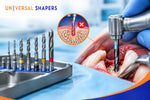
Sequential drilling is standard practice. Clinicians move from smaller to larger diameter drills in a defined order, gradually shaping the osteotomy. This step-by-step approach helps prevent excessive bone trauma at any single stage.
Heat management matters throughout drilling. Excessive friction can raise bone temperature and compromise healing. Adequate irrigation and controlled speed help keep temperatures within safe limits.
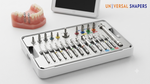
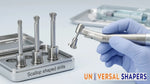
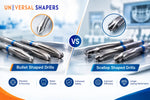
Different drill designs serve different purposes within the sequence. Bullet shaped drills help create the initial osteotomy path with a tapered, self-guiding tip. Scallop shaped drills contour the crestal bone to support soft tissue adaptation around the healing abutment. Cortical release drills address dense cortical bone, easing entry and reducing resistance during placement. Bone profiling drills refine the osteotomy shape near the crest, supporting a more natural implant-abutment transition.
Together, these instruments contribute to precision and stability throughout the osteotomy sequence. Choosing the right drill at each stage supports predictable, repeatable results.
Clinical Considerations
Several factors influence whether a guided approach is appropriate for a given case.
Bone quality varies significantly between patients and sites. Dense cortical bone behaves differently under the drill than soft, cancellous bone. Planning must account for this variation before surgery begins.
Guide stability is essential for accuracy. A guide that shifts during drilling can undermine even the best digital plan. Clinicians should verify passive fit and secure fixation before proceeding.
Surgical experience still matters in guided workflows. Understanding when to deviate from the plan, and recognizing anatomical variation intraoperatively, remains a clinical skill. Equipment requirements also matter, since guided systems depend on compatible handpieces, sleeves, and drill kits.
Appropriate case selection ties all these factors together. Guided surgery suits many situations well. Complex bone defects or atypical anatomy may need additional planning or a hybrid approach.
Is Guided Implant Surgery Suitable for Every Patient?
Guided implant surgery works well for most implant candidates, but it is not universal. Patients with adequate bone volume and clear diagnostic imaging are typically strong candidates. Those with severe bone loss may need grafting or a modified surgical plan first.
Clinician judgment remains essential in every case. Digital planning supports decision-making, but it does not replace a thorough clinical examination.
Precision Matters in Implant Dentistry
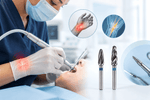
High-quality instrumentation directly affects surgical predictability. Sharp, well-designed drills cut more efficiently and generate less heat than worn or poorly engineered alternatives. This translates into more consistent osteotomy preparation across cases.
Universal Shapers manufactures precision implant drills designed to support accurate, controlled osteotomy preparation. Their drill systems are built for structured drilling sequences, helping clinicians maintain consistency case to case. Reliable instrumentation supports predictable, evidence-based implant care.
Manufacturer recommendations should always guide drill selection and sequencing. Following established protocols helps ensure consistent outcomes across different bone types and clinical scenarios.
Conclusion
Guided implant surgery brings digital planning and precise instrumentation together to support more predictable outcomes. Careful case selection, accurate imaging, and a well-fabricated surgical guide all contribute to a smoother procedure. Understanding sequential osteotomy drilling, from entry to final bone profiling, shows why instrument quality matters.
Precision instrumentation remains a foundational part of predictable implant dentistry. Clinicians can explore Universal Shapers' implant drills and surgical kits for more detail.