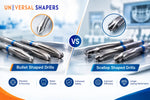
How to Choose Between Bullet Shaped Drills and Scallop Shaped Drills
Selecting the appropriate drill design during dental implant preparation is a decision that directly influences the quality of the osteotomy and the long-term predictability of the restoration. Drill geometry affects how bone is cut, how heat is managed, and how the final implant site accommodates both the fixture and the surrounding soft tissues.
Among the various designs available, bullet shaped drills and scallop shaped drills represent two distinct approaches to implant site preparation. Understanding their differences helps clinicians make informed decisions based on the specific demands of each case.
What Are Bullet Shaped Drills?
Bullet shaped drills feature a rounded, tapered tip that resembles a bullet profile. This shape allows smooth entry into bone with minimal resistance. The contour is formed by revolving a curve about an axis, creating an apex and a base that correspond to the implant body.
These drills are commonly used to create anatomical osteotomies and harvest autogenous bone during drilling. The collected bone can later be grafted around the implant neck. The tapered form allows for controlled cutting and reduces trauma to surrounding tissues. The primary purpose of bullet shaped drills is to shape the osteotomy while preserving bone structure.
What Are Scallop Shaped Drills?
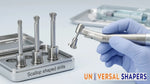
Scallop shaped drills are specialised surgical instruments designed to sculpt and contour bone during site preparation. Unlike conventional drills that create a straight cylindrical hole, these instruments create a profiled bone surface that mimics the natural scalloped contour of the crestal bone.
These drills profile bone and create an ideal soft tissue bed around the implant. The scalloped design allows cortical release, which increases vascularity and reduces crestal bone loss. Scallop shaped drills are also used in sinus augmentation for a more predictable lateral approach. Their geometry focuses on shaping the coronal aspect rather than the entire implant bed, helping guide soft tissue growth toward an optimal emergence profile.
Comparing Bullet and Scallop Shaped Drills
Neither design is universally superior; selection depends entirely on the clinical situation. A direct comparison helps clarify their distinct roles.
Geometry and Cutting Characteristics
Bullet shaped drills have a tapered tip that follows the implant axis, creating a tapered osteotomy. Scallop shaped drills have a broader, contoured profile designed to cut laterally, sculpting the crestal bone to match the natural bone architecture.
Osteotomy Depth and Bone Engagement
Bullet shaped drills prepare the full depth of the osteotomy, engaging bone along the entire drill path. Scallop shaped drills focus on the coronal aspect, refining the bone profile after the initial osteotomy is created. They engage primarily the crestal bone, relieving cortical pressure and creating space for soft tissue adaptation.
Access, Control, and Application
Bullet shaped drills offer excellent control in guided and freehand procedures due to their smooth entry. Scallop shaped drills require careful positioning to avoid over-preparation. Bullet shaped drills are suitable for primary osteotomy creation and bone harvesting. Scallop shaped drills are used for bone profiling and shaping the soft tissue bed. Some complex cases may benefit from using both drill types sequentially.
The Role of Implant Osteotomy Drills in Site Preparation
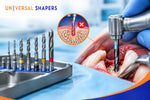
Implant Osteotomy drills form the foundation of site preparation. These instruments create the precise channel in bone that will receive the dental implant. The osteotomy must match the implant dimensions in diameter and length while preserving bone vitality.
A typical sequence begins with a pilot drill to establish the correct axis. Subsequent drills progressively enlarge the osteotomy to the final diameter. The sequence must follow the relevant surgical protocol, considering implant dimensions, bone quality, and site anatomy. Bone quality significantly influences the protocol. In soft bone, undersizing may improve primary stability. In dense bone, additional steps prevent overheating and pressure necrosis. The design of Implant Osteotomy drills affects heat generation; sharp, well-designed drills cut efficiently at lower temperatures. Clinicians must follow manufacturer guidance on speed, irrigation, and sequencing.
Clinical Scenarios for Bullet Shaped Drills
Bullet shaped drills are useful in several situations. Their tapered design allows smooth entry, making them suitable for guided implant procedures. These drills are often chosen when harvesting autogenous bone during osteotomy preparation is beneficial. The bullet shape allows bone to collect within the flutes for grafting around the implant neck.
They are also appropriate when creating an anatomical osteotomy that closely matches the implant shape. The tapered profile preserves bone along the length of the osteotomy while providing adequate space for the implant body. The decision to use bullet shaped drills should factor in bone density. In dense bone, the tapered tip may reduce the force required for drilling. In soft bone, the design helps maintain cortical engagement.
Clinical Scenarios for Scallop Shaped Drills
Scallop shaped drills are considered when the clinical objective includes shaping the crestal bone to improve soft tissue outcomes. These drills create a natural emergence profile by contouring the bone around the implant platform. They are frequently used in the aesthetic zone, where preservation of the interdental papilla is a priority. The scalloped contour supports papilla formation between implants or adjacent teeth.
These drills are also considered when cortical release is needed to reduce pressure on the crestal bone. By relieving cortical tension, they help prevent future bone loss and improve soft tissue conditions. In sinus augmentation, scallop shaped drills offer a safer approach for creating the lateral window. Their contoured design allows controlled bone removal without damaging the sinus membrane. Use should always be based on specific preparation requirements and a thorough assessment of the surgical site.
Understanding Bone Profiling Drills
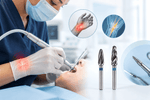
Bone profiling drills are instruments used to shape and contour bone around the implant platform. Bone profiling refers to the process of removing or reshaping bone to create an ideal surface for prosthetic components and soft tissue adaptation.
Bone profiling differs from the initial osteotomy preparation. The osteotomy creates the channel for the implant body, while bone profiling refines the coronal bone around the implant neck. Profiling guides soft tissue growth and achieves an optimal emergence profile. These drills remove bone interference around implants, allowing proper seating of healing abutments and final restorations. They also relieve cortical bone, increasing vascularity and reducing crestal bone loss. Not every case requires bone profiling. The decision depends on the implant system, surgical approach, and desired restorative outcome. When indicated, profiling must be performed with precision to avoid compromising the implant-bone interface.
Essential Factors for Drill Selection
Several factors should guide your drill choice. Consider these points before proceeding with site preparation.
-
Implant dimensions: The drill diameter and length must match the implant. Using the correct sequence ensures the osteotomy fits the specifications.
-
Bone anatomy: The shape and density of the alveolar bone influence drill choice. Dense cortical bone differs from soft cancellous bone.
-
Bone quality: Density affects cutting efficiency and heat generation. Undersizing may improve stability in soft bone, while cortical release benefits hard bone.
-
Surgical site: Posterior sites present different access challenges than anterior sites.
-
Implant system: Different systems have specific drill protocols. Follow the manufacturer's recommendations for each system.
-
Drill sequence: The order of drills affects final osteotomy dimensions. Following the correct sequence is essential for predictable results.
-
Manufacturer guidance: Adhere to instructions regarding speed, irrigation, and usage to ensure safe drilling.
-
Clinician experience: Familiarity with a design influences surgical efficiency. Use instruments you are comfortable with.
-
Surgical objectives: Aesthetic considerations and bone preservation goals should inform your selection.
Drill selection should never be based on habit alone. Each situation is unique, and the choice must reflect specific case requirements.
Why Drill Geometry Matters
The shape and design of a drill significantly affect its interaction with bone. Geometry influences cutting efficiency, heat generation, and the final osteotomy shape. A well-designed drill cuts cleanly with minimal friction. Poorly designed or dull drills generate excess heat, causing thermal necrosis and compromising integration. The cutting edges, flute design, and tip shape all contribute to performance.
Drill geometry also affects implant stability. An osteotomy that closely matches the implant shape provides better initial stability and reduces micromovement during healing. An oversized or irregular osteotomy can compromise stability and increase failure risk. Different designs exist because clinical situations vary. A design effective in dense bone may not suit soft bone. A design prioritising bone harvesting may not offer the same soft tissue benefits as one focused on crestal contouring.
Making an Informed Choice
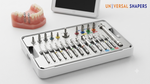
Understanding why drill geometry matters helps clinicians make better decisions. It also emphasises the importance of using high-quality instruments that retain their cutting characteristics over repeated use. Universal Shapers offers a range of precision surgical drills designed for implant site preparation. Their product line includes bullet shaped drills, scallop shaped drills, and cortical release drills, all engineered for controlled cutting. The company's guided surgical kit combines these instruments into a comprehensive system. For clinicians seeking reliable options, Universal Shapers provides solutions that support various surgical approaches.