Why Professional‑Grade Dental Instruments Matter for Implant Success
Dental implants are not a set it and forget it business. You, as a clinician, are basically playing an architectural high-stakes game within a breathing and living environment that is very sensitive. The patient is not paying to have a titanium screw. The patient is paying to have a permanent solution so that they can eat, talk, and smile without having to give it a second thought.
When an implant fails, the finger-pointing starts. Was it the patient’s hygiene? Was it the bone density? Or was it the tool used to create the site? In my experience, the unsung hero (or villain) of the story is the quality of your instruments. If you are trying to perform precision surgery with dull, low-grade metal, you are setting yourself up for a very awkward follow-up appointment.
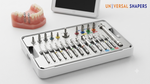
At Universal Shapers, we understand that precision is the only currency that matters in implantology. Here is why professional-grade dental instruments are the difference between a successful osseointegration and a costly failure.

The Biological Cost of Good Enough
We must quit taking the jawbone as a piece of pine wood you get at a hardware store. Bone is a living, moving tissue that is vascular. It responds to heat, pressure and trauma. If your Implant Osteotomy drills are not sharp enough or are made from inferior alloys, they don't cut; they burn.
The Heat Factor
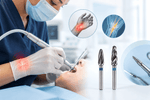
Bone cells (osteoblasts) are incredibly sensitive to temperature. If the friction from a dull drill raises the local temperature above 47 degree celsius for even a minute, you risk thermal necrosis. Once that bone dies, it doesn't matter how expensive the implant is; it will not integrate. High-quality Implant Osteotomy drills are engineered to cut cleanly at lower temperatures, preserving the vitality of the surgical site.
Vibration and Stability
Cheap drills often have slight imbalances. At high RPMs, that tiny wobble creates an osteotomy that is slightly larger than intended. That major stability that is very important in the healing process is lost. With the Implant Osteotomy drill, a snug fit is predictable and will be the case each time you use a precision-balanced drill.

The Game Changers: Specialized Drill Designs
In 2026, we have moved beyond the one size fits all approach to site preparation. Specialized anatomy requires specialized tools. If you are still using a basic pilot drill for every scenario, you are working harder than you need to.
Scallop Shaped Drills: Aesthetics and Bone Health
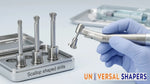
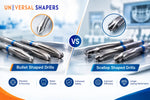
One of the biggest challenges in the aesthetic zone is preserving the interdental papilla and the crestal bone. This is where scallop shaped drills come into play. These are specifically designed to mimic the natural contour of the bone and the gingival architecture.
By using scallop shaped drills, you are able to prepare the site while respecting the biological width. It allows for a more natural emergence profile of the final crown, which is what separates a good result from a masterpiece.
Cortical Release Drills: Managing Stress
Dense cortical bone is a double-edged sword. It provides great initial stability, but it is also prone to high levels of stress and poor blood supply. If you over-compress this bone during implant placement, it can lead to pressure necrosis and subsequent bone loss.
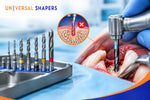
Cortical release exercises have been developed in order to relieve this tension. They enable the surgeon to loosen the hardest aspect of the bone a little, allowing the implant to fit firmly without the development of a pressure cooker effect that kills healthy tissue.
Why Materials Science Matters
Not all stainless steel is created equal. When you look at the catalog on our website, you’ll see a focus on high-grade, medical-quality materials. Why does this matter for your bottom line?
- Corrosion Resistance: Your instruments go through a brutal cycle of blood, saliva, and high-pressure steam sterilization. Poor quality tools will rust and pit, forming a place for bacteria.
- Edge Retention: A professional-grade drill stays sharp for significantly longer. A dull drill is a dangerous drill. When you realize that you need to squeeze the drill into the bone, then it is too late.
- Biocompatibility: You are introducing these tools into a surgical site. You need the assurance that no heavy metal leachates or impurities are being left behind in the osteotomy.
The ROI of Premium Instruments
I get it. Running a practice is expensive. It is so easy to save money when you look at a set of drills that is half the price of professional ones. But let’s look at the math.
If a cheap drill leads to just one failed implant a year, you’ve lost the cost of the failed implant and components, the chair time for the removal and cleaning, and the cost of the bone graft to repair the site. Most importantly, you lose the patient's trust and your professional reputation.
When you invest in high-quality Implant Osteotomy drills from a trusted source like Universal Shapers, you aren't just buying metal. You are buying insurance. You are buying the peace of mind that comes with knowing your site preparation was as perfect as modern technology allows.
Maintenance: Respect the Tool
Even the best Implant Osteotomy drill won't last forever. Professional-grade doesn't mean invincible.
To get the most out of your investment, you need a strict protocol. Track the number of uses for each drill. If you are working in exceptionally dense bone (Type D1), count that as double wear. Clean them immediately after surgery to prevent bioburden from hardening, and always inspect the tips under magnification before they go into the autoclave.
For any slightest indication of an uninteresting edge or a projecting nick in the flutes, throw it away. The price of a new drill is nothing in comparison with the price of a failed surgery.
Conclusion: Don't Compromise on the Foundation
In the world of restorative dentistry, the foundation isn't the implant itself; it’s the bone-to-implant interface. The quality of that interface is determined by the few minutes you spend with a drill in your hand.
Utilizing specialized tools like scallop shaped drills for aesthetic cases and cortical release drills for dense bone isn't just extra credit. It is the gold standard of modern care. Using professional grade tools, you are explaining to your patients and yourself that you do not cut corners.
High-performance surgery requires high-performance tools. It’s that simple.