Improving Dental Implant Accuracy with Advanced Drill Kits
The margin of error has been virtually eliminated in the world of modern dentistry, particularly as
we head into 2026. Patients are no longer seeking a replacement of a tooth; they are seeking perfection. They desire a restoration that is natural, works flawlessly, and lasts a lifetime.
To a clinician, that pressure is squarely on the shoulders of the accuracy of placement. You may have the priciest implant in the world, yet when the osteotomy is misplaced by a fraction of a millimeter or the angulation is tilted a little, the whole case is ruined. Here, the results are determined by the equipment in the tray. It is not only about steady hands, but also about the advanced engineering that is achieved in high-end drill kit systems to achieve dental implant accuracy.
The Anatomy of Precision in 2026
The shift from freehand placement to high-precision surgery has been driven by one thing: data. We now have the ability to map a patient’s jaw in three dimensions with incredible detail. But that data is useless if the tools used to execute the plan aren't capable of following that map.
The Role of the Guided-Surgical-Kit
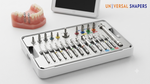
The introduction of the guided-surgical-kit has fundamentally changed the workflow of the modern dental practice. In the past, a surgeon relied heavily on visual cues and tactile feedback. Today, a surgical guide acts as the physical interface between the digital plan and the patient’s anatomy.
A high-quality guided-surgical-kit ensures that every drill in the sequence is constrained to a specific path. By using master sleeves and drill-in-drill technology, the kit eliminates the "skating" effect that often happens when a drill hits dense cortical bone. This level of control is what allows for flapless surgery and immediate loading, which are the benchmarks of a high-end practice today.
Heat Management and Bone Biology
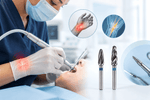
One of the most overlooked aspects of accuracy is the biological response of the bone. If a drill is dull or poorly designed, it generates excessive frictional heat. If the temperature of the bone rises above 47°C (116.6°F) for even a minute, you risk thermal necrosis. Dead bone does not osseointegrate.
The Best Implant drills are engineered with internal or advanced external irrigation channels that keep the site cool even at higher RPMs. Accuracy isn't just about where the hole is; it is about the quality of the bone that remains after the hole is made.
Technical Excellence: Implant Abutment Drills
Once the initial pilot hole is established, the sequence moves toward shaping the site for the specific implant body and the eventual prosthetic connection. This is where Implant abutment drills come into play.
Achieving the Perfect Fit
The bond between the bone and the implant must be close, but the bond between the abutment and the implant must be absolute. Crestal bone loss and possible screw loosening are caused by any micro-movement at the restorative interface.
Advanced Implant abutment exercises are meant to form an accurate seat that corresponds to the geometry of the final hardware. When the drill is inaccurately made because of bad manufacturing tolerances, the implant will lack the primary stability that will lead to success. Precision drills make the final torque values predictable, and this is the ultimate aim of any surgeon.
What Defines the Best Implant Drills?
When you put a high-performance surgical drill and a standard drill under a microscope, the difference would be astounding. The best in 2026 is not a subjective concept, but a material science.
-
Sharpness and Longevity: Top-tier drills use specialized coatings like Diamond-Like Carbon (DLC) or specific stainless steel alloys that maintain their cutting edge for more cycles. A dull drill requires more pressure, and more pressure leads to less accuracy.
-
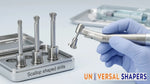
Step-Drill Geometry: Rather than having to switch between ten different drills, the Best Implant drills often utilize step-geometry, allowing a single tool to perform multiple widening tasks while maintaining the center of the osteotomy.
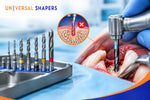
- Depth Control: Accuracy isn't just about X and Y coordinates; it is about the Z-axis. Integrated depth stops are a non-negotiable feature for modern kits. They prevent the "over-drilling" that leads to nerve damage or sinus perforations.
Reducing Human Error Through Systematic Design
The fact is that surgery is tiresome. Even the most competent clinician may feel tired towards the end of a long day. A well-designed drill kit is built to be "forgiving."
The color-coding mechanisms that correspond the drills to the implants, visible laser-etched markings, which do not become faded after five autoclave cycles, and easy-to-follow tray arrangements all aid in accuracy. In a logical system, the burden on the surgeon mentally is minimized and the surgeon is in a position to concentrate on the anatomy of the patient and not on the tool to do the job.
The Impact on Long-Term Outcomes
So what is all this technical talk? Since the cost of failure is astronomical. The failure of an implant not only implies the loss of a tooth but also the loss of bone, possible infection, and a huge blow to the reputation of the clinic.
With the assistance of a guided-surgical kit and high-grade implant abutment drills, the clinician is able to make certain that the forces of mastication are evenly distributed throughout the implant body. Proper positioning results in improved aesthetics, less difficulty in hygienic procedures for the patient and a prosthetic that fits the first time without hours of chairside manipulation.
How Universal Shapers Helps
Good enough is no longer an option in the cut-throat world of dental manufacturing. Universal Shapers has established itself as a serious collaborator to clinicians who do not want to compromise on precision.
The emphasis on the strict manufacturing demands of contemporary implantology means that Universal Shapers offers the tools to assist in closing the gap between a digital surgical plan and a successful clinical reality. We have a variety of high performance components that are aimed at fitting into advanced workflows.
At Universal Shapers, we are interested in the engineering of the edge. We can provide the consistency that professionals require, whether one practice is looking to upgrade its current kit or completely transition to guided surgery. Every drill is a promise made to a patient and they develop their products so that it is upheld.