Smart Ways to Improve Implant Results with Advanced Dental Drills
When you become a dental professional in 2026, it will be known that the times of drill and fill are a distant past. We live in the era of biological accuracy. A dental implant is no longer a matter of replacing a missing tooth; it is a matter of architectural involvement with the human body.
The success of an implant doesn't start when you torque the fixture into place. It starts much earlier, with the very first osteotomy. If your drilling technique is sloppy or your equipment is outdated, you are essentially trying to build a skyscraper on a foundation of loose sand. At Universal Shapers, we believe that the tools you hold in your hand should be as smart as the surgeon using them. This guide explores how advanced drilling technology is transforming implant success rates.
The Foundation of Successful Dental Implants
In the world of implantology, "Primary Stability" is the holy grail. This is what defines the mechanical hold the implant has in the bone immediately after placement. This is done by ensuring that your osteotomy (hole you drill) is exactly matched to the size of the implant.
Why Precision Drilling Matters
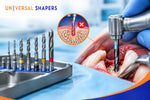
Every micron counts. Should the osteotomy be in any way too broad, then you lose that precious first hold. When it is too small, there is a risk of over-compressing the bone and consequently causing pressure necrosis and premature implant loss. Precision drilling is done to ensure that the interface of titanium and the bone is optimally done on the first day of osseointegration.
Traditional Drills vs. Advanced Technology
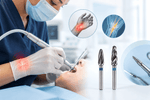
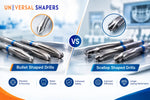
Traditional dental drills were often "dumb" tools. They relied entirely on the tactile feel and manual control of the dentist. Advanced drills in 2026 are different. They use clever materials and special geometries such as bullet-shaped exercises, which enable the centering of more and have a smoother penetration into the cortical bone. The new systems are also meant to minimize vibration and give a cleaner cut, which does not harm the delicate bone architecture.
Risks of Outdated Drilling Techniques
The biggest enemy of bone is heat. Old drills, particularly those which are no longer sharp or whose cooling is defective, may easily increase the temperature of the bone beyond 47 degrees Celsius. At this stage, the cells of the bone are destroyed. This is a silent killer of implants, which is known as thermal necrosis. Moreover, the improper design of the drills may cause the development of the so-called chatter or drifting and the creation of an oval-shaped opening instead of the ideal circle.
Key Features of Advanced Dental Drills
To improve your results, you need to understand what makes a drill "advanced." It isn't just about the motor; it’s about the engineering of the tip and the management of the surgical site.
Speed Control and Torque Optimization
Not all bones are created equal. D1 bone (dense) needs another treatment compared to D4 bone (soft). The highly developed drilling systems provide granular control over RPM and torque. This will make sure that you are not rotating the drill too slowly in the dense bone, which will produce heat, or too fast in the soft bone, making it tear.
Irrigation Systems for Bone Preservation
Keeping the site cool is non-negotiable. Advanced drills often feature internal irrigation channels. This delivers sterile saline directly to the cutting edge, exactly where the friction is highest. This is far more effective than external sprays, which can be blocked by the anatomy of the mouth or the drill itself.
Ergonomic Design for Surgical Accuracy
Surgeon fatigue is a real factor in clinical errors. Advanced handpieces are balanced to sit perfectly in the hand, reducing the strain on the wrist during long procedures. This allows for higher accuracy when navigating difficult angles, especially in the posterior regions of the mouth.
How Advanced Drills Improve Implant Outcomes
This is where the specialized tools would be used. A series of exercises that are task-specific is required to achieve optimal outcomes.
First, bullet shaped drills are used for the initial pilot hole. Their unique geometry prevents the drill from "walking" across the bone surface, ensuring the implant is placed exactly where the surgical guide or your treatment plan intended.
Second, after osteotomy is prepared, bone profiling drills are utilized in shaping the crestal bone. This is one of the critical steps that one can miss. Profiling the bone around the neck of the implant will help ensure that there will be no excess pressure on the crestal bone, which is the most likely area to undergo resorption. This will result in more favorable long-term cosmetic outcomes and healthier soft tissue.
Finally, Implant abutment drills are used to refine the internal geometry or the platform of the implant site. This provides a perfect fit of the restorative components. An ideal fit at the abutment level eliminates the existence of micro-gaps, which harbor bacteria and are the major cause of peri-implantitis.
Selecting the Right Drill System for Your Practice
Choosing a drill system is like choosing a partner for your practice. You need reliability, precision, and support. When evaluating systems, look for:
-
Material Quality: Diamond or coats of high grade stainless steel that retain sharpness throughout many cycles.
-
Versatility: A system with a large variety of sizes and shapes, with specialty Bone profiling drills.
-
Compatibility: Make sure that the drills are compatible with your present setting of handpieces and implant systems.
-
Ease of Sterilization: Search for easy-to-clean designs and those that do not have dead areas where dirt can be accumulated.
At Universal Shapers, we focus on creating tools that bridge the gap between high-end technology and practical, everyday use in a busy clinic.
Best Practices for Integrating Advanced Drilling Technology
Buying the tools is only half the battle. You have to use them correctly to see the return on investment.
-
Monitor Drill Wear: Even the best drills dull over time. Use a "counting system" to track how many times a drill has been used and replace it before it starts generating excess heat.
-
Use a Step-By-Step Sequence: Never skip a drill in the sequence. Each size is designed to remove a specific amount of bone. Skipping steps puts too much stress on the bone and the equipment.
-
Calibrate Your Motor: Make sure that your surgical motor is adjusted to the drill you are using. Torque settings of a pilot drill will be vastly different from those of a final shaping drill.
-
Stay Updated on Training: Your technique should change with the changing technology. Frequent training sessions on updated drilling procedures would make your complication rates very low.
Conclusion
The future of implant dentistry is bright and at the same time challenging. The more patients know, the higher their expectations of the results that may be termed as perfect. You cannot deliver 2026 results with 2010 tools.
Investing in advanced technology, from bullet shaped drills to sophisticated Implant abutment drills, is an investment in your patients' health and your practice’s reputation. Precision in the early stages of the surgery pays massive dividends in the restorative phase and the long-term survival of the implant.
If you are ready to elevate your surgical game, it starts with the shaper in your hand. Visit [suspicious link removed] to explore our range of precision-engineered dental tools designed for the modern clinician.