Why Bone Profiling Matters in Modern Dental Implant Procedures
Implant success depends on more than accurate depth and angulation. The bone surrounding the implant platform plays a direct role in how well soft tissue heals, how cleanly a restoration seats, and how stable the final result looks over time. Bone profiling addresses this part of the procedure directly, and we build it into our instrument systems as a standard step in modern implant protocols.
In this article, we explain what bone profiling involves, why it matters clinically, and how our scallop shaped drills support the technique in your daily practice.
What Bone Profiling Means in Implant Dentistry
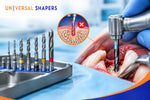
Bone profiling refers to shaping the crestal bone around an implant site after you complete the core osteotomy. Rather than leaving a flat, uniform rim at the top of the site, you contour this area to create a more natural transition between bone and the future restoration.
We designed our profiling drills for the final stage of the drilling sequence, once you reach the planned depth and diameter of the osteotomy. The goal is not to change implant position but to refine the bone architecture immediately surrounding it.
What bone profiling changes at the implant site:
-
The contour of the crestal bone around the implant platform
-
The space available for soft tissue to develop naturally
-
The seating surface for healing abutments and prosthetic components
Why Bone Sculpting Affects Long-Term Implant Success
Bone sculpting around the implant platform has an outsized effect on outcomes that show up months after surgery, particularly in the soft tissue. We have seen how a flat, unshaped rim of bone tends to produce a less predictable soft tissue contour, which can affect both function and appearance around the restoration.
When you build bone sculpting into your protocol, you can expect these benefits:
-
A more natural gingival contour around the implant crown
-
Better long-term stability of the peri-implant soft tissue
-
Reduced likelihood of tissue recession at the implant margin
-
A cleaner seating surface for healing abutments, which supports predictable tissue maturation
These outcomes matter most in cases your patients see every day, such as anterior single-tooth implants and full-arch restorations with visible margins.
The Role of Bone Profiling Drills in the Surgical Sequence
We designed our bone profiling drills for a specific stage of the procedure. They do not replace the osteotomy drills that establish the implant site. Instead, they take over once you complete that preparation.
A typical sequence looks like this:
-
Pilot and progressive osteotomy drills establish the implant site to the correct depth and diameter
-
Bone profiling drills contour the crestal bone around the coronal portion of the site
-
You place the implant into the profiled site
Using bone profiling drills at the wrong stage, or skipping the step entirely, reduces the benefit they offer. We recommend treating this step as a defined part of your sequence rather than an optional add-on.
Scallop Shaped Drills and Cortical Scalloping Explained
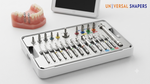
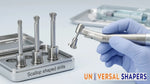
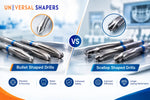
Our scallop shaped drills are one of the main instruments we manufacture to perform bone profiling. Their contoured, flared cutting surface shapes the crestal bone into a scalloped pattern rather than a flat edge, which mirrors the natural architecture found around healthy teeth.
We call this process cortical scalloping, and it focuses specifically on the cortical portion of the bone at the top of the implant site. Cortical scalloping creates small variations in height and contour around the implant platform instead of a single uniform rim.
What cortical scalloping supports clinically:
-
A scalloped bone profile that better matches natural tooth anatomy
-
Improved space for soft tissue to fill in around the implant collar
-
A more defined seating area for healing abutments and multi-unit components
If you are new to our scallop shaped drills, we recommend practicing the technique on straightforward cases before applying it in esthetically demanding sites, since the profiling motion differs slightly from standard osteotomy drilling.
Clinical Situations Where Bone Profiling Makes the Biggest Difference
Bone profiling does not carry equal weight in every case. We see it matter most in situations where soft tissue appearance or prosthetic seating has a direct impact on the outcome.
-
Esthetic zone cases, where visible soft tissue contour affects the final result
-
Immediate implant placement, where the extraction socket needs additional shaping for tissue adaptation
-
Full-arch and multi-unit abutment cases, where a consistent bone profile supports even seating across several implants
-
Cases involving healing abutments or prosthetic components that need a well-defined bone platform
In cases with thick soft tissue biotype or minimal esthetic demand, you may notice a smaller benefit from bone profiling, though many of our customers still include the step for consistency across their protocol.
Building Bone Profiling into Your Implant Protocol
Adding bone profiling to your existing protocol does not require a complete rework of technique. It fits in as one additional, well-defined step at the end of your drilling sequence.
We suggest a few practical steps to help you integrate it smoothly:
-
Confirm where bone profiling drills fit within your current drill sequence before your first case
-
Match your drill selection to your case type, since esthetic and full-arch cases often benefit the most
-
Review our guidance on speed and irrigation, since the profiling motion differs from standard drilling
-
Keep the technique consistent across your team so results stay predictable regardless of who performs the step
Practices that treat bone profiling as a standard part of their sequence, rather than an exception, tend to see more consistent soft tissue outcomes across their caseload.
Why We Focus on Precision in Bone Profiling Instruments
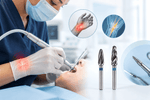
Not every bone profiling drill performs the same way. Small differences in cutting geometry can lead to uneven contouring, which affects the soft tissue result the technique is meant to improve. We hold our manufacturing to a tight tolerance so the cutting surface stays consistent from drill to drill, supporting a repeatable outcome case after case.
At Universal Shapers, we build this level of precision into our scallop shaped drills and profiling instruments, so you get a consistent cutting geometry across a full set rather than variation from one drill to the next. This consistency matters most in cortical scalloping, where fine differences in contour can influence how tissue heals around the implant.
We believe that choosing well-manufactured instruments, backed by clear technique guidance, makes the difference between a profiling step that adds real value and one that adds inconsistency to an otherwise solid protocol.
Conclusion
Bone profiling has moved from a specialized technique to a practical part of many modern implant protocols, and we design our instruments to support that shift. By shaping the crestal bone with our bone profiling drills and scallop shaped drills, you support better soft tissue outcomes, cleaner prosthetic seating, and more predictable results in esthetically demanding cases.
The technique works best when it becomes a defined, repeatable step in your protocol, supported by precision instruments and clear sequencing.
If you are ready to build cortical scalloping into your implant protocol, we invite you to explore our range of scallop shaped and profiling drills, designed at Universal Shapers for consistent, predictable bone contouring.