How Does the Right Drill Improve Multi-Unit Abutment Preparation?
A multi-unit abutment case can go almost exactly to plan, then stall on one small detail: an abutment that will not seat the way it should. That kind of gap is rarely about surgical skill. More often, it traces back to the drill used to prepare the site.
Many clinicians spend most of their planning time on implant position, angulation, and prosthetic design, while giving little thought to the instrument that shapes the bone itself. Yet in multi-unit abutment cases, where several implants support one prosthetic framework, drill selection plays a bigger role than most surgeons realize. It shapes seating accuracy, bone health, and how the restoration performs years later.
What Multi-Unit Abutment Preparation Involves
Multi-unit abutments connect implants to a fixed prosthetic framework, correcting angulation so the restoration sits evenly across the arch. They are central to All-on-4, All-on-6, and similar full-arch protocols, where implants are rarely placed at matching angles.
Preparing the site means shaping bone around each implant platform so the abutment seats cleanly against it. It calls for a steady hand, the right drill sequence, and close attention to how each implant relates to the others across the arch. A small error at one site can throw off the fit of the whole prosthesis.
Why Drill Selection Affects Restoration Success
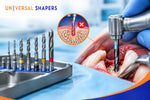
The osteotomy created during site preparation becomes the foundation everything else builds on. A drill that cuts cleanly and consistently produces predictable dimensions, while a worn or poorly designed drill can leave the site slightly irregular.
In multi-unit abutment cases, these small irregularities tend to add up. If one site is slightly off, clinicians often compensate later through extra angulation, added torque, or cement adjustments. A precise, well-made drill reduces the need for these workarounds and keeps the case closer to plan.
How the Right Drill Improves Seating Accuracy
Seating accuracy starts with how cleanly the osteotomy is shaped. Drills with sharp, well-balanced cutting edges remove bone smoothly, without the wobble or drifting that can come from dull or poorly designed instruments.
This matters even more when several implants support a single prosthetic bar. When each site is prepared accurately, the abutments seat passively across the arch. A passive fit reduces stress on the screws and framework, helping the restoration hold up for years, not months.
Preserving Bone and Supporting Healthy Soft Tissue
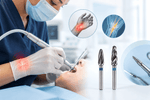
Friction during drilling generates heat, and bone does not tolerate heat well. Once temperatures rise too high, surrounding bone cells can be damaged, putting osseointegration and implant stability at risk.
A sharp, efficient drill cuts with less resistance, which limits heat buildup and protects the bone around the implant. Intact bone also gives soft tissue a stable foundation to heal against, supporting a natural gum contour around the abutment and a lower chance of irritation later.
Reducing Surgical Errors and Improving Workflow
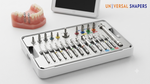
A well-designed drill system helps surgical teams stay organized during longer procedures. Clear calibration marks, consistent sizing, and a logical sequence all reduce the chance of reaching for the wrong instrument mid-case.
Full-arch surgery often means preparing several sites in sequence under real time pressure. Fewer instrument mix-ups save more than time. They also ease the mental load on the team, helping prevent small errors that might otherwise go unnoticed.
Precision Matters Most in Guided Implant Procedures
Guided surgery depends on a tight relationship between the drill and the surgical guide. A slight mismatch can shift the implant off its planned position. That risk grows in multi-unit cases, where several implants need to align within one shared framework.
Drills built for guided workflows help preserve the accuracy established during digital planning. The appeal of guided surgery lies in how closely the plan matches the outcome. That only holds true if the instruments used are precise enough to deliver it.
What to Look for When Selecting a Drill
Not every drill performs the same way, even when two products look similar on the shelf. A few factors are worth evaluating closely before choosing a system for multi-unit abutment cases.
Sharpness and Material Quality
The metal and manufacturing process behind a drill affect how long it holds an edge. A drill that stays sharp longer cuts more consistently and generates less heat.
Flute Design and Debris Clearance
How a drill clears bone debris while cutting affects both heat and control. Better flute geometry keeps the cutting path clean, supporting smoother, more predictable drilling in denser bone.
Compatibility with Guides and Implant Systems
A drill should align closely with the implant system and any guided components in use. Even a small mismatch can introduce inaccuracies that show up later as a poor abutment fit.
Clinicians searching for the best implant drill for their practice often find these details matter more than price or packaging. A slightly higher upfront cost is easy to justify when a drill delivers accurate, repeatable results.
Best Practices During Abutment Preparation
Working through the full drilling sequence, rather than skipping steps to save time, keeps each osteotomy accurate and consistent. Rushing through drill sizes is one of the more common ways small errors creep in.
Steady irrigation throughout the procedure helps control heat and keeps the drill cutting as designed. It is also worth inspecting drills regularly for wear, since a dull instrument can behave very differently from a sharp one, even within the same kit.
How Quality Instruments Support Long-Term Clinical Outcomes
The effects of drill quality extend well beyond the day of surgery. Precise site preparation supports stronger osseointegration, more accurate abutment seating, and restorations that continue to function comfortably for years.
Because of this, many clinicians prefer sourcing instruments from manufacturers with a strong reputation for precision. Universal Shapers is known among implant professionals for producing drills designed with accuracy and bone preservation in mind. That attention to detail tends to show up in long-term outcomes.
Final Thoughts
Multi-unit abutment preparation rewards attention to detail, and the drill is one detail that influences nearly everything downstream. From seating accuracy to bone health to how smoothly a procedure unfolds, the right instrument shapes outcomes long before the final restoration is ever placed.
For clinicians working with full-arch cases, treating drill selection as a clinical decision rather than a supply decision pays off. The right drill does not just make the procedure easier. It helps build restorations that hold up well for years to come.