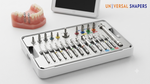
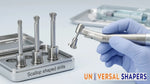
5 Things You Need to Know Before Investing in Scallop Shaped Drills
Adding a new instrument to your implant protocol is not a small decision. It affects your drilling sequence, your training curve, and ultimately your clinical outcomes. Scallop Shaped Drills have become a popular addition to modern implant kits because of the role they play in shaping bone around the implant platform, but investing in them works best when you understand exactly what they do and where they fit.
This guide walks through five practical points every clinician should consider before adding Scallop Shaped Drills to their instrument tray, from their purpose in cortical scalloping to what separates a well-made drill from an average one.
1. Know Exactly What Scallop Shaped Drills Are Designed to Do
Scallop Shaped Drills are not a replacement for your standard osteotomy drills. Their job starts after you prepare the osteotomy to the correct depth and diameter.
Their contoured, flared cutting surface profiles bone around the coronal portion of the implant site. This process, often called cortical scalloping, shapes the crestal bone into a scalloped architecture rather than leaving a flat, uniform rim.
What this achieves clinically:
-
A more natural transition zone between bone and the future restoration
-
Additional space for soft tissue to develop around the implant collar
-
A contoured bed that can support healing abutments, multi-unit abutments, or the final prosthesis
Understanding this distinction matters. Clinicians who expect a scallop shaped drill to perform the same task as an osteotomy drill are often disappointed, simply because it was never designed for that purpose.
2. They Play a Specific Role in the Drilling Sequence
Scallop Shaped Drills work best when you use them at the correct point in the sequence, typically after you establish the osteotomy diameter and depth and before you place the implant.
A typical sequence might look like this:
-
Pilot and progressive osteotomy drills establish the core implant site
-
Cortical scalloping with scallop shaped or cortical release drills contours the crestal bone
-
You place the implant into the profiled site
Skipping steps, or using the drill at the wrong stage, reduces its effectiveness and can compromise the intended bone architecture. Before investing, confirm that your surgical protocol has a clear place for cortical scalloping within the sequence, and that your team understands when to introduce it.
3. Case Selection Affects the Value You Get From Them
Not every case calls for the same degree of bone profiling. Scallop Shaped Drills tend to offer the most noticeable benefit in specific clinical situations:
-
Esthetic zone cases where soft tissue contour has a visible impact on the final result
-
Immediate implant placement, where crestal bone shaping supports better tissue adaptation
-
Full-arch and multi-unit abutment cases that benefit from a consistent, profiled bone bed
-
Sites where healing abutments or prosthetic components need a well-defined seating area
In cases with thick biotype, minimal esthetic demand, or straightforward single-unit restorations, the benefit may be smaller. Reviewing your typical case mix helps you judge how often you would realistically use the instrument, which directly affects the return on your investment.
4. Compatibility With Your Implant System and Workflow
Scallop Shaped Drills generally work with standard surgical handpieces, but you still need to confirm diameter and length compatibility with your specific implant system. Before purchasing, check the following:
-
Whether the drill diameters align with the implant platforms you use most often
-
Whether the drills integrate with your existing guided or freehand workflow
-
Whether you need additional instruments, such as cortical release drills, to complete the intended bone profiling
-
Whether your sterilization and instrument management systems can accommodate the added instruments
A drill that does not fit cleanly into your existing workflow adds friction rather than efficiency, regardless of how well it is designed.
5. Instrument Quality and Manufacturer Support Affect Long-Term Value
Manufacturing quality varies across Scallop Shaped Drills. Precision in the cutting geometry, consistency across a full set, and durability through repeated sterilization cycles all influence how the drill performs over time.
Questions worth asking before you invest:
-
Is the cutting geometry consistent across every drill in the set?
-
Does the manufacturer provide clear documentation on sequencing and technique?
-
What is the expected lifespan of the drill under normal sterilization protocols?
-
Is technical support available if questions come up during clinical use?
We design our drill systems with these long-term factors in mind, offering dental professionals instruments built for consistent performance across repeated cases. Choosing a well-supported, precision-manufactured system tends to pay off more over time than opting for the lowest-cost option.
Why Precision Matters in Cortical Scalloping
Cortical scalloping is a fine-margin procedure. Small inconsistencies in drill geometry can translate into uneven bone contouring, which may affect soft tissue healing and the final esthetic outcome.
Precision-manufactured drills help ensure that:
-
Each pass produces a consistent, predictable contour
-
Heat generation stays controlled during the profiling step
-
The instrument performs the same way case after case, supporting a repeatable protocol
This consistency is one of the reasons practices look toward us, as Universal Shapers focus specifically on precision instrumentation for implant site preparation, when evaluating new additions to their surgical kits.
Training and Technique Considerations
Adding Scallop Shaped Drills to your protocol also means building the technique to use them well. The profiling motion differs from standard osteotomy drilling, and clinicians new to the instrument benefit from a short learning period before using it on complex cases.
A few practical steps that ease the transition:
-
Review manufacturer guidance on speed, pressure, and irrigation for the profiling step
-
Practice the sequence on models or straightforward cases before moving to esthetically demanding sites
-
Involve your surgical assistant early, since instrument handling and tray setup change slightly with additional drills in the sequence
-
Document your protocol so the technique stays consistent across the team, not just with one clinician
Investing in the instrument is only part of the equation. Investing a small amount of time in technique pays off in more predictable results once the drills become part of your regular workflow.
Weighing the Cost Against the Clinical Benefit
Scallop Shaped Drills represent an added cost on top of your existing drill inventory, so it helps to weigh that cost against the clinical value they add. Consider how often your case mix would call for cortical scalloping, and whether the improvement in soft tissue contour and prosthetic seating justifies the expense for your practice.
Practices with a steady flow of esthetic zone, immediate placement, or full-arch cases tend to see the instrument pay for itself through more predictable outcomes and fewer adjustments at the restorative stage. Practices with a narrower case mix may want to start with a smaller set before expanding their inventory.
Making the Decision
Before investing in Scallop Shaped Drills, take stock of your case mix, your current drilling sequence, and how the new instrument would fit into your existing protocol. A short conversation with your instrument supplier about sizing, sequencing, and support can clarify whether the investment matches your clinical needs.
Scallop Shaped Drills are a valuable addition for practices that regularly manage esthetic zone cases, immediate placements, or full-arch protocols where crestal bone contouring plays a meaningful role in the outcome. For other case types, the benefit may be more occasional. Either way, understanding the purpose, sequencing, and quality considerations covered here puts you in a better position to make an informed purchase.
If you are exploring precision-engineered options, Universal Shapers offers a range of scallop shaped and complementary drills designed for modern implant site preparation.