One Stage vs. Two Stage Dental Implant Surgery: A Guide for Dentists
Dental implant surgery generally follows one of two surgical protocols: one-stage or two-stage. Both approaches aim for stable osseointegration, but they differ in when the implant is exposed. In one-stage surgery, the implant is exposed to the mouth from the start. In two-stage surgery, the implant heals under the gum before a second procedure. This guide compares the two approaches and outlines the clinical factors that influence the choice. It is written for dentists assessing which protocol fits a specific case.
What Is One-Stage Implant Surgery?
One-stage Implant surgery places the implant and a healing abutment in the same procedure. The abutment stays visible above the gum line throughout healing. There is no separate surgery to uncover the implant later.
This approach is often considered when the following conditions are present:
-
Good primary implant stability at placement
-
Sufficient bone volume and density
-
Healthy soft tissue coverage around the implant site
-
A restorative plan that does not require staged healing
The general workflow typically includes:
-
Clinical assessment and imaging
-
Osteotomy preparation
-
Implant placement and abutment connection
-
A single healing phase before restoration
This sequence can shorten the overall treatment timeline when conditions support it.
What Is Two-Stage Implant Surgery?
Two-stage implant surgery places the implant first, then covers it fully with soft tissue. A second, separate surgery later exposes the implant and connects the abutment.
This protocol is often considered when the following conditions are present:
-
Lower primary stability at the time of placement
-
Bone grafting or augmentation as part of the plan
-
Soft tissue that benefits from more controlled healing
-
A preference for a fully submerged healing environment
The general workflow typically includes:
-
Clinical assessment and imaging
-
Osteotomy preparation
-
Implant placement and tissue closure
-
A healing period under the gum
-
A second surgery to uncover the implant and connect the abutment
-
Restoration once healing is confirmed
This staged approach allows more protected healing before the implant is loaded.
Key Differences Between One-Stage and Two-Stage Surgery
The table below summarises the main practical differences.
|
Factor |
One-Stage |
Two-Stage |
|
Surgical visits |
One |
Two |
|
Implant exposure |
Immediate |
Delayed |
|
Soft tissue coverage |
Partial, around the abutment |
Full, submerged healing |
|
Common use case |
Favourable bone and stability |
Lower stability or grafting involved |
|
Restoration timeline |
Can often proceed sooner |
Follows the uncovering step |
Neither protocol is inherently better than the other. The right choice depends on the clinical picture in front of the dentist.
Factors Dentists Consider When Choosing an Approach
Several clinical factors guide the decision between one-stage and two-stage surgery.
-
Bone quality and volume: denser, well-supported bone often favours immediate exposure.
-
Implant stability: higher primary stability supports a one-stage approach.
-
Soft tissue condition: thin or compromised tissue may favour submerged healing.
-
Healing requirements: grafted sites often need protected, undisturbed healing time.
-
Patient factors: medical history, smoking status, and oral hygiene all matter.
-
Treatment goals: aesthetic priorities and restoration timelines shape the plan.
No single factor decides the protocol on its own. Dentists weigh these considerations together during treatment planning.
The Role of Clinical Assessment and Treatment Planning
Careful assessment before surgery shapes the outcome of either approach. Imaging, periodontal evaluation, and bone mapping all inform the surgical plan.
Treatment planning should account for the patient's anatomy and restorative goals. It should also anticipate how healing will progress under each protocol.
Clinical judgement remains central to this decision. No general guide replaces an individualised clinical assessment.
The Role of Implant Osteotomy Preparation
Osteotomy preparation is a critical step in both one-stage and two-stage surgery. The osteotomy must match the implant's dimensions and the surrounding bone density.
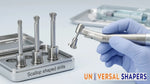
Implant osteotomy drills shape the site through a sequence of controlled widening steps. Drill sequence and speed affect heat generation and primary implant stability. Consistent, well-maintained Implant osteotomy drills support a more predictable osteotomy outcome.
Bone density varies by location and by patient. Dentists often adjust the drilling sequence accordingly. Under-preparing softer bones slightly can help improve initial implant stability.
Surgical Instruments and Procedure Planning
Reliable instrumentation supports predictable implant placement across both protocols. Dental implant surgical kits bring together the drills, drivers, and measuring tools needed for a procedure.
Organised Dental implant surgical kits reduce chairside delays and support a consistent surgical sequence. This matters when a case moves through multiple stages of healing and restoration.
Universal Shapers produces implant surgical instrumentation intended to support this kind of procedural consistency. Dentists reviewing their instrument setup may find it useful to consider how kit organisation affects daily workflow. This applies regardless of whether a case follows a one-stage or two-stage protocol.
Practical Considerations for Dentists
A few practical points are worth keeping in mind when comparing the two approaches:
-
One-stage surgery can shorten overall treatment time when conditions allow.
-
Two-stage surgery can offer more protected healing for compromised sites.
-
Both approaches depend on sound surgical technique and careful instrument care.
-
Patient communication should reflect the chosen timeline and realistic expectations.
Some clinicians favour one protocol for most of their cases. Others assess each patient individually and select the approach that fits. Either way, the decision should follow a clear clinical rationale.
Conclusion
One-stage and two-stage implant surgery both aim for stable, functional outcomes. The main difference lies in implant exposure, healing environment, and the number of surgical stages.
Bone quality, implant stability, soft tissue condition, and patient factors all inform the choice. Neither approach suits every case.
The decision ultimately rests on clinical assessment and the dentist's professional judgement. Applied carefully, that judgement is what makes either protocol successful for the patient.